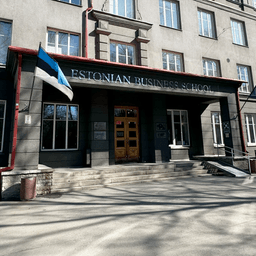
EFMD-accredited studies give EBS students a global competitive advantage
The Business Administration bachelor’s programme at Estonian Business School has been awarded a five-year accreditation by the European Foundation for Management Development (EFMD) in 2025 – a recognition that confirms the programme meets international quality standards and provides students with a stronger position in both the job market and further studies.
EFMD accreditation is one of the most prestigious quality labels in business education. It is awarded to programmes that meet rigorous international criteria in terms of curriculum content, faculty qualifications, international outlook, practical relevance for the labour market, and alumni success. This means that EBS’s Business Administration programme operates at the level of the world’s leading business schools. Fewer than 50 programmes worldwide have received EFMD’s five-year top accreditation.
What does this mean for students?
Studying in an EFMD-accredited programme provides a clear competitive advantage:
- Stronger credibility with employers – graduates’ qualifications are highly valued, including by global companies
- Access to international study opportunities – a recognised degree opens doors to exchange programmes and master’s studies at top universities worldwide
- Future-proof education – programme quality is regularly assessed and continuously developed to keep pace with changes in the business environment
Why does this create a long-term advantage?
According to Anto Liivat, Head of Bachelor’s and Master’s Programmes at EBS, the value of accreditation goes beyond a quality label and has a direct impact on students’ future opportunities:
“Although we first received EFMD accreditation in Estonia already in 2016, its greatest value for students lies in their future career opportunities. It ensures that our graduates’ education is internationally recognised, high-quality, and trusted – employers and partner universities know what our alumni are capable of. From a student’s perspective, this is a clear competitive advantage, especially in the international job market.”
An international and practical learning experience
The EBS Business Administration programme stands out for its strong international focus and practical approach. Studies are carried out in close cooperation with companies, students solve real-life business challenges, and develop skills that employers value most today – from critical thinking to teamwork and digital competencies.
Learn more about the International Business Administration bachelor’s programme on the EBS website.
20. aprill 2026

How do we prepare students to operate in an AI-influenced business environment?
EBS students gain practical learning experience through real-world projects, close collaboration with entrepreneurs, and entrepreneurship and development projects integrated into the curriculum. The study process is designed so that students do not only acquire knowledge, but also develop practical skills in validating ideas, building business models, and bringing solutions to market. Dedicated development programmes support them through the key stages of entrepreneurship, providing structure and guidance from initial ideas to working solutions.
An important role is also played by the EBS TooEarly venture studio, where ideas are developed into practical outcomes — validated products, pilot projects, and investment-ready ventures. Students are supported through mentoring, rapid prototyping, early-stage funding, workspace, and access to markets.
As highlighted by Rector Meelis Kitsing, the future of business education lies in the skillful combination of entrepreneurial thinking and artificial intelligence. This means not only understanding new technologies, but also applying them in innovation, decision-making, and venture creation — an approach that is increasingly shaping modern business education.
The full article with Rector Meelis Kitsing’s insights can be found here: https://blog.efmdglobal.org/2026/04/15/estonian-business-school-rector-ai/
17. aprill 2026
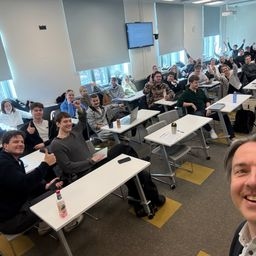
From Prompting to Prototyping: How New Digital Solutions Are Created
An intensive course on digital product development and prototyping, delivered to EBS students, demonstrated how quickly it is possible to move from an idea to a functional digital solution using artificial intelligence and effective prompting. In just three days, participants progressed from understanding user problems to building working prototypes.
The course was led by Marko Rillo and Kai Olbrei, with a strong focus on product thinking — how to connect user needs, business logic, and technological possibilities into a coherent whole. Students used AI tools to create designs, define logic, and build functional software prototypes, even without a deep technical background.
The result was a range of working solutions—from recruitment platforms to applications that simplify everyday life. The course confirmed that in today’s technology landscape, the critical skill is the ability to clearly articulate, test, and develop ideas—even if programming is not your core expertise.
Digital Product Management MBA (1-year programme)
EBS will launch a new one-year master’s programme this autumn: Digital Product Management MBA. It is designed for experienced professionals and leaders who want to operate at the intersection of technology and business.
The programme consists of four modules that follow the natural lifecycle of a product—from strategy and discovery to design, development, and scaling. The studies are delivered in a session-based format, taking place every other Friday and Saturday, and include sprint-based teamwork and practical simulations that can be immediately applied in everyday work.
Applicants with a prior master’s degree, a four-year bachelor’s degree, or at least seven years of professional experience can complete the programme within one year. Those who do not meet these criteria will continue into a second year, completing additional business administration courses alongside EBS MBA students in order to obtain the master’s degree.
15. aprill 2026



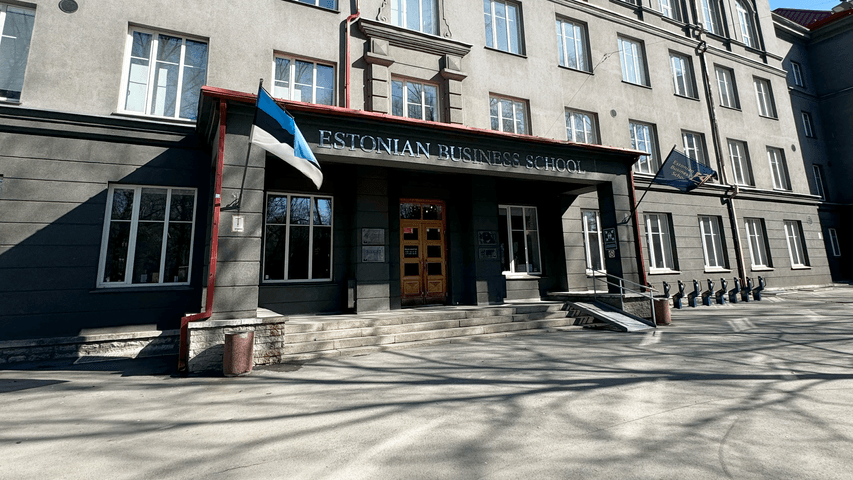
EFMD-accredited studies give EBS students a global competitive advantage
The Business Administration bachelor’s programme at Estonian Business School has been awarded a five-year accreditation by the European Foundation for Management Development (EFMD) in 2025 – a recognition that confirms the programme meets international quality standards and provides students with a stronger position in both the job market and further studies.
EFMD accreditation is one of the most prestigious quality labels in business education. It is awarded to programmes that meet rigorous international criteria in terms of curriculum content, faculty qualifications, international outlook, practical relevance for the labour market, and alumni success. This means that EBS’s Business Administration programme operates at the level of the world’s leading business schools. Fewer than 50 programmes worldwide have received EFMD’s five-year top accreditation.
What does this mean for students?
Studying in an EFMD-accredited programme provides a clear competitive advantage:
- Stronger credibility with employers – graduates’ qualifications are highly valued, including by global companies
- Access to international study opportunities – a recognised degree opens doors to exchange programmes and master’s studies at top universities worldwide
- Future-proof education – programme quality is regularly assessed and continuously developed to keep pace with changes in the business environment
Why does this create a long-term advantage?
According to Anto Liivat, Head of Bachelor’s and Master’s Programmes at EBS, the value of accreditation goes beyond a quality label and has a direct impact on students’ future opportunities:
“Although we first received EFMD accreditation in Estonia already in 2016, its greatest value for students lies in their future career opportunities. It ensures that our graduates’ education is internationally recognised, high-quality, and trusted – employers and partner universities know what our alumni are capable of. From a student’s perspective, this is a clear competitive advantage, especially in the international job market.”
An international and practical learning experience
The EBS Business Administration programme stands out for its strong international focus and practical approach. Studies are carried out in close cooperation with companies, students solve real-life business challenges, and develop skills that employers value most today – from critical thinking to teamwork and digital competencies.
Learn more about the International Business Administration bachelor’s programme on the EBS website.
20. aprill 2026

How do we prepare students to operate in an AI-influenced business environment?
EBS students gain practical learning experience through real-world projects, close collaboration with entrepreneurs, and entrepreneurship and development projects integrated into the curriculum. The study process is designed so that students do not only acquire knowledge, but also develop practical skills in validating ideas, building business models, and bringing solutions to market. Dedicated development programmes support them through the key stages of entrepreneurship, providing structure and guidance from initial ideas to working solutions.
An important role is also played by the EBS TooEarly venture studio, where ideas are developed into practical outcomes — validated products, pilot projects, and investment-ready ventures. Students are supported through mentoring, rapid prototyping, early-stage funding, workspace, and access to markets.
As highlighted by Rector Meelis Kitsing, the future of business education lies in the skillful combination of entrepreneurial thinking and artificial intelligence. This means not only understanding new technologies, but also applying them in innovation, decision-making, and venture creation — an approach that is increasingly shaping modern business education.
The full article with Rector Meelis Kitsing’s insights can be found here: https://blog.efmdglobal.org/2026/04/15/estonian-business-school-rector-ai/
17. aprill 2026
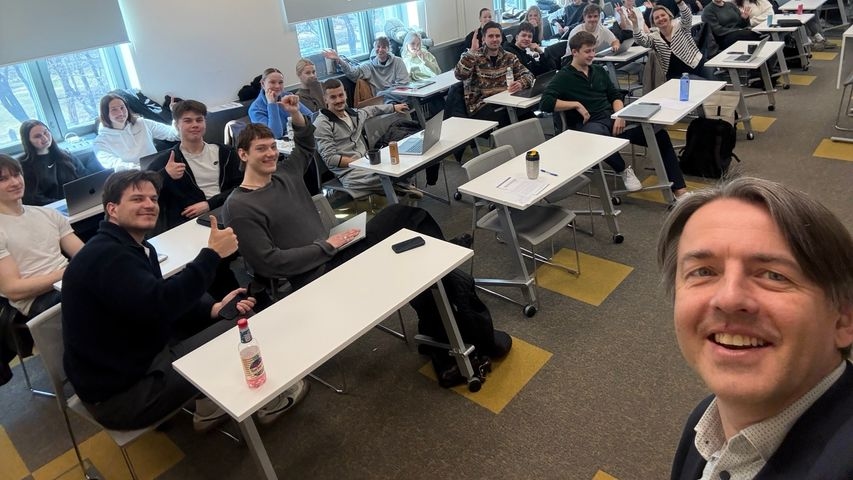
From Prompting to Prototyping: How New Digital Solutions Are Created
An intensive course on digital product development and prototyping, delivered to EBS students, demonstrated how quickly it is possible to move from an idea to a functional digital solution using artificial intelligence and effective prompting. In just three days, participants progressed from understanding user problems to building working prototypes.
The course was led by Marko Rillo and Kai Olbrei, with a strong focus on product thinking — how to connect user needs, business logic, and technological possibilities into a coherent whole. Students used AI tools to create designs, define logic, and build functional software prototypes, even without a deep technical background.
The result was a range of working solutions—from recruitment platforms to applications that simplify everyday life. The course confirmed that in today’s technology landscape, the critical skill is the ability to clearly articulate, test, and develop ideas—even if programming is not your core expertise.
Digital Product Management MBA (1-year programme)
EBS will launch a new one-year master’s programme this autumn: Digital Product Management MBA. It is designed for experienced professionals and leaders who want to operate at the intersection of technology and business.
The programme consists of four modules that follow the natural lifecycle of a product—from strategy and discovery to design, development, and scaling. The studies are delivered in a session-based format, taking place every other Friday and Saturday, and include sprint-based teamwork and practical simulations that can be immediately applied in everyday work.
Applicants with a prior master’s degree, a four-year bachelor’s degree, or at least seven years of professional experience can complete the programme within one year. Those who do not meet these criteria will continue into a second year, completing additional business administration courses alongside EBS MBA students in order to obtain the master’s degree.
15. aprill 2026