Estonian Business School
Those who are crazy enough to think they can change the world are the ones who actually do. Welcome!
Learn responsible entrepreneurship and leadership!
From high school to doctoral studies, from beginner to top professional, from degree programmes to executive education – EBS combines academic knowledge with practical learning to prepare you for a successful international career in business and management.
Doctoral Studies
EBS offers a distinctive practice-oriented PhD in Management that connects academic research with the realities and challenges of today’s business world.
Continuing education
You can choose from degree courses, microdegrees, and executive development programmes — all designed to fit your goals, schedule, and lifestyle.
Master's Studies
Take your knowledge and skills further with an academic Master’s in Business Administration (MA), or enhance your strategic and leadership capabilities through a professional MBA.
Bachelor's Studies
EBS provides internationally recognised bachelor’s programmes for both full-time students and working professionals — helping you build a strong foundation for success in global business.
High School
At EBS High School, students go beyond the national curriculum with in-depth studies in economics, entrepreneurship, finance, marketing, and management — developing skills that prepare them for the future.
Education that inspires bold ideas and brave action
EBS has both the drive and the resources to support your growth and ambitions beyond the classroom. That’s why we created Eedu, an education and business campus dedicated to fostering the international success of Estonia’s startups and bold ideas.
Join us — and you’ll never have to start from scratch!
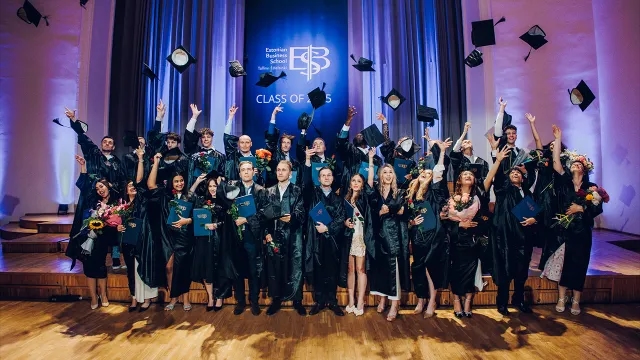
A complete journey in business education
At EBS, you can shape your entire learning path in business and management — from high school to doctoral studies. Whether you’re just starting out, studying while working, or advancing your research career, EBS helps you grow at every stage of your professional journey.
A truly international learning environment
EBS brings the world to you — with students from 39 countries and one in three lecturers coming from abroad. Our global network of nearly 70 partner universities opens doors to study experiences and career opportunities around the world.
A global network that lasts a lifetime
At EBS, the connections you make are often just as valuable as the knowledge you gain — and they tend to last even longer. Our community of over 6,200 alumni is shaping the future of business and driving innovation every day, in Estonia and around the world.
EBS Continuing Education – invest in your future through lifelong learning!
Today’s business world rewards those who keep learning and act with foresight. New knowledge and skills help you take the next step in your career — or start an entirely new one.
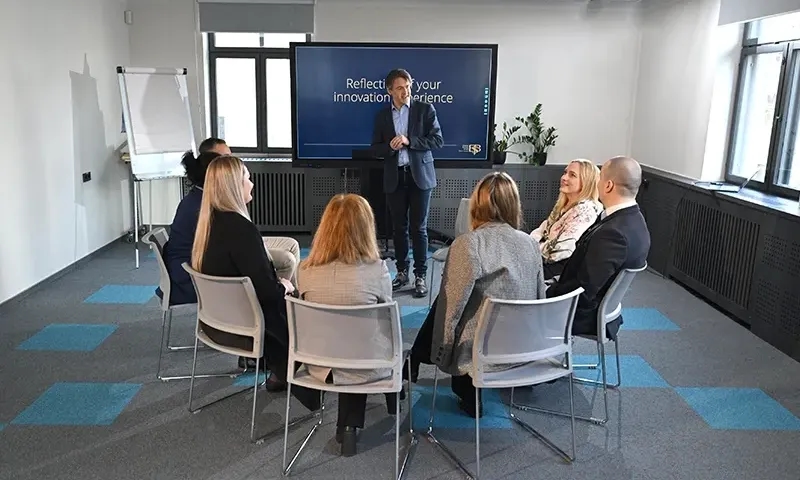
Open University Courses
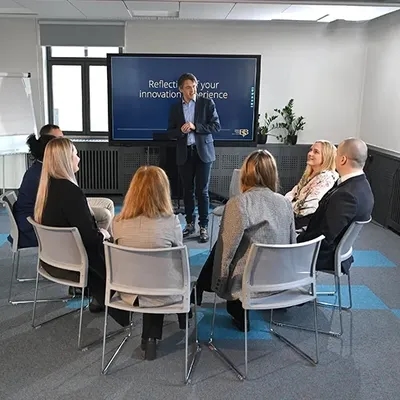
Join bachelor’s and master’s level Open University courses to deepen your expertise and expand your professional network.


Development Programmes
EBS Development Programmes are designed for leaders at every level who want to enhance their leadership and communication skills, and stay competitive in a rapidly changing business environment.


Microdegrees
EBS Microdegree Programmes are perfect for independent learners who want to refresh existing knowledge or acquire new, in-demand competencies for today’s job market.


Coaching
EBS Coaching, integrated with business and leadership training, focuses on an organisation’s most valuable asset — its people. Our internationally accredited coaching programmes support personal growth, leadership development, and stronger teams.
1-256x256.webp&w=3840&q=100)
Modesty is a virtue – but you’ll get further in life without it.
1-128x128.webp&w=3840&q=100)
Madis Habakuk
Founder of EBS
News
Mohammad Toyon’s Doctoral defence highlights retention of working university students in Estonia
On December 18, 2025, at Estonian Business School, Mohammad Abu Sayed Toyon stood before a defence committee to present five years of work on a question that affects students more than most universities and policymakers care to admit: what happens when students have to work to pursue their education?
The defence, led by Associate Professor Riina Koris, brought together Associate Professor Maarja Beerkens from Leiden University and Senior Lecturer Oleg Badunenko from Brunel University as opponents. Both praised the thesis for clear research questions, rigorous focus, and genuine relevance.
Beerkens noted that she was initially sceptical about measuring dropout intention rather than actual dropout, “but I see it’s really well argued now... You convinced me entirely why this is a valid measure, perhaps even a better measure.” Badunenko emphasised the thesis’s value in “highlighting the realities of working students, how they see education and how universities need to align with this new reality.”
The supervisors, Professor Kaire Põder and Assistant Professor Niveditha Prabakaran Pankova, spoke with affection about the journey. “It was five years ago, 2020, when we first saw you,” Põder recalled, noting that Toyon entered during the pandemic, part of a cohort that learned to be independent researchers while isolated. “You were sitting in Sillamäe alone, no social capital, no peer effect, very limited teachers’ effect.” Pankova, who joined EBS the same year as Toyon, described growing together: “He’s my first PhD student... I could relate to him a lot because I was in his shoes not very long ago.” There was laughter when they recounted Toyon arriving with 300 pages, saying, “The thesis is done.”
After a brief deliberation, the committee returned with three unanimous votes in favour, awarding Toyon the degree of Doctor of Philosophy in Management.
But the research itself demands attention beyond the ceremony. In a room full of academics, Toyon’s findings landed differently because they weren’t abstract. They were about the students sitting in every classroom, working night shifts between lectures, choosing between rent and textbooks.
Understanding the work: A conversation with Dr Mohammad Abu Sayed Toyon
What is your research about, and why does it matter?
My research focuses on the retention of working university students. It matters because retention is not only about keeping students enrolled, but also about how they are treated after they enter university. Just as organisations pay attention to the experience after a purchase (post-purchase experience), universities must recognise that students arrive with expectations, responsibilities, and lives that extend beyond the classroom.
This research centres on working students and gives them a voice. In Estonia, one in three students identifies primarily as a worker, and 37% of working students cannot afford higher education without paid employment. Yet higher education has long been imagined for a different kind of student: one with time to spare, sufficient financial security, and a life arranged neatly around the academic calendar. But today’s students live differently. They work to pay rent, to support families, and to build a future that cannot wait.
When institutions fail to recognise this reality, students rarely fail loudly; they simply leave. This research shows which groups of working students are most at risk of dropping out, why relationships within universities matter, and what working students need while integrating study and paid work. It also highlights what universities can do to better support them and help them stay.
What has the doctoral journey been like for you?
The doctoral journey has been full of memories, challenges, and insights. One of the most meaningful moments for an academic is seeing their academic works accepted by scholars in the field and made publicly available. This brings a sense of validation and motivation to continue contributing to the knowledge community, and I am no exception.
One of the main challenges has been learning that success in science is not only about what you know, but also about how well you communicate it and meet the expectations of others.
Who from the faculty has been instrumental to your journey?
Everyone at EBS has contributed in different ways, but Professor Kaire Põder has been especially instrumental in supporting and guiding my journey.
What has been the most rewarding part of this process?
The relationships and connections formed during this journey have been the most rewarding. Education is not a destination, but a never-ending path. What makes it meaningful is the sense that something uncertain still lies ahead, along with the hope that keeps one moving forward.
What advice would you give to other doctoral students or those considering a PhD?
I would advise thinking carefully before enrolling in a PhD programme, as it is very different from master’s-level study. It is not simply a matter of enrolling, publishing a few articles, writing a monograph, and then saying goodbye to the university. A PhD is a process of capital accumulation, where you build resources through connections, skills, and, most importantly, self-reliance.
What is next for you after the defence?
After the defence, I plan to focus on upcoming projects and continue applying the skills and insights gained throughout this academic journey.
Dr Mohammad Abu Sayed Toyon defended his doctoral thesis, “Retention of Working University Students in Higher Education: Insights from the Estonian Context,” on December 18, 2025, at Estonian Business School.
The thesis was supervised by Professor Kaire Põder and Assistant Professor Niveditha Prabakaran Pankova. The defence committee was chaired by Associate Professor Riina Koris and assisted by EBS Research and Doctoral Studies Coordinator Sigrid Lainevee, with opponents Associate Professor Maarja Beerkens (Leiden University) and Senior Lecturer Oleg Badunenko (Brunel University London).
19. detsember 2025

Mohammad Toyon’s Doctoral defence highlights retention of working university students in Estonia
On December 18, 2025, at Estonian Business School, Mohammad Abu Sayed Toyon stood before a defence committee to present five years of work on a question that affects students more than most universities and policymakers care to admit: what happens when students have to work to pursue their education?
The defence, led by Associate Professor Riina Koris, brought together Associate Professor Maarja Beerkens from Leiden University and Senior Lecturer Oleg Badunenko from Brunel University as opponents. Both praised the thesis for clear research questions, rigorous focus, and genuine relevance.
Beerkens noted that she was initially sceptical about measuring dropout intention rather than actual dropout, “but I see it’s really well argued now... You convinced me entirely why this is a valid measure, perhaps even a better measure.” Badunenko emphasised the thesis’s value in “highlighting the realities of working students, how they see education and how universities need to align with this new reality.”
The supervisors, Professor Kaire Põder and Assistant Professor Niveditha Prabakaran Pankova, spoke with affection about the journey. “It was five years ago, 2020, when we first saw you,” Põder recalled, noting that Toyon entered during the pandemic, part of a cohort that learned to be independent researchers while isolated. “You were sitting in Sillamäe alone, no social capital, no peer effect, very limited teachers’ effect.” Pankova, who joined EBS the same year as Toyon, described growing together: “He’s my first PhD student... I could relate to him a lot because I was in his shoes not very long ago.” There was laughter when they recounted Toyon arriving with 300 pages, saying, “The thesis is done.”
After a brief deliberation, the committee returned with three unanimous votes in favour, awarding Toyon the degree of Doctor of Philosophy in Management.
But the research itself demands attention beyond the ceremony. In a room full of academics, Toyon’s findings landed differently because they weren’t abstract. They were about the students sitting in every classroom, working night shifts between lectures, choosing between rent and textbooks.
Understanding the work: A conversation with Dr Mohammad Abu Sayed Toyon
What is your research about, and why does it matter?
My research focuses on the retention of working university students. It matters because retention is not only about keeping students enrolled, but also about how they are treated after they enter university. Just as organisations pay attention to the experience after a purchase (post-purchase experience), universities must recognise that students arrive with expectations, responsibilities, and lives that extend beyond the classroom.
This research centres on working students and gives them a voice. In Estonia, one in three students identifies primarily as a worker, and 37% of working students cannot afford higher education without paid employment. Yet higher education has long been imagined for a different kind of student: one with time to spare, sufficient financial security, and a life arranged neatly around the academic calendar. But today’s students live differently. They work to pay rent, to support families, and to build a future that cannot wait.
When institutions fail to recognise this reality, students rarely fail loudly; they simply leave. This research shows which groups of working students are most at risk of dropping out, why relationships within universities matter, and what working students need while integrating study and paid work. It also highlights what universities can do to better support them and help them stay.
What has the doctoral journey been like for you?
The doctoral journey has been full of memories, challenges, and insights. One of the most meaningful moments for an academic is seeing their academic works accepted by scholars in the field and made publicly available. This brings a sense of validation and motivation to continue contributing to the knowledge community, and I am no exception.
One of the main challenges has been learning that success in science is not only about what you know, but also about how well you communicate it and meet the expectations of others.
Who from the faculty has been instrumental to your journey?
Everyone at EBS has contributed in different ways, but Professor Kaire Põder has been especially instrumental in supporting and guiding my journey.
What has been the most rewarding part of this process?
The relationships and connections formed during this journey have been the most rewarding. Education is not a destination, but a never-ending path. What makes it meaningful is the sense that something uncertain still lies ahead, along with the hope that keeps one moving forward.
What advice would you give to other doctoral students or those considering a PhD?
I would advise thinking carefully before enrolling in a PhD programme, as it is very different from master’s-level study. It is not simply a matter of enrolling, publishing a few articles, writing a monograph, and then saying goodbye to the university. A PhD is a process of capital accumulation, where you build resources through connections, skills, and, most importantly, self-reliance.
What is next for you after the defence?
After the defence, I plan to focus on upcoming projects and continue applying the skills and insights gained throughout this academic journey.
Dr Mohammad Abu Sayed Toyon defended his doctoral thesis, “Retention of Working University Students in Higher Education: Insights from the Estonian Context,” on December 18, 2025, at Estonian Business School.
The thesis was supervised by Professor Kaire Põder and Assistant Professor Niveditha Prabakaran Pankova. The defence committee was chaired by Associate Professor Riina Koris and assisted by EBS Research and Doctoral Studies Coordinator Sigrid Lainevee, with opponents Associate Professor Maarja Beerkens (Leiden University) and Senior Lecturer Oleg Badunenko (Brunel University London).
19. detsember 2025